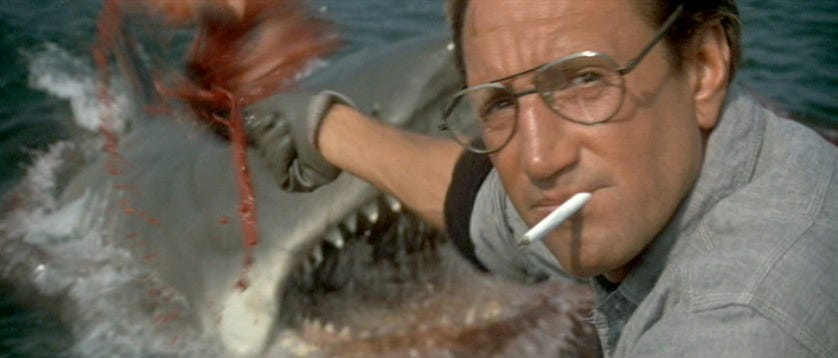
JAWS Turns 50
Some spotty memories & scattered thoughts on my first Spielberg shark encounter and my last tango with Peter Benchley

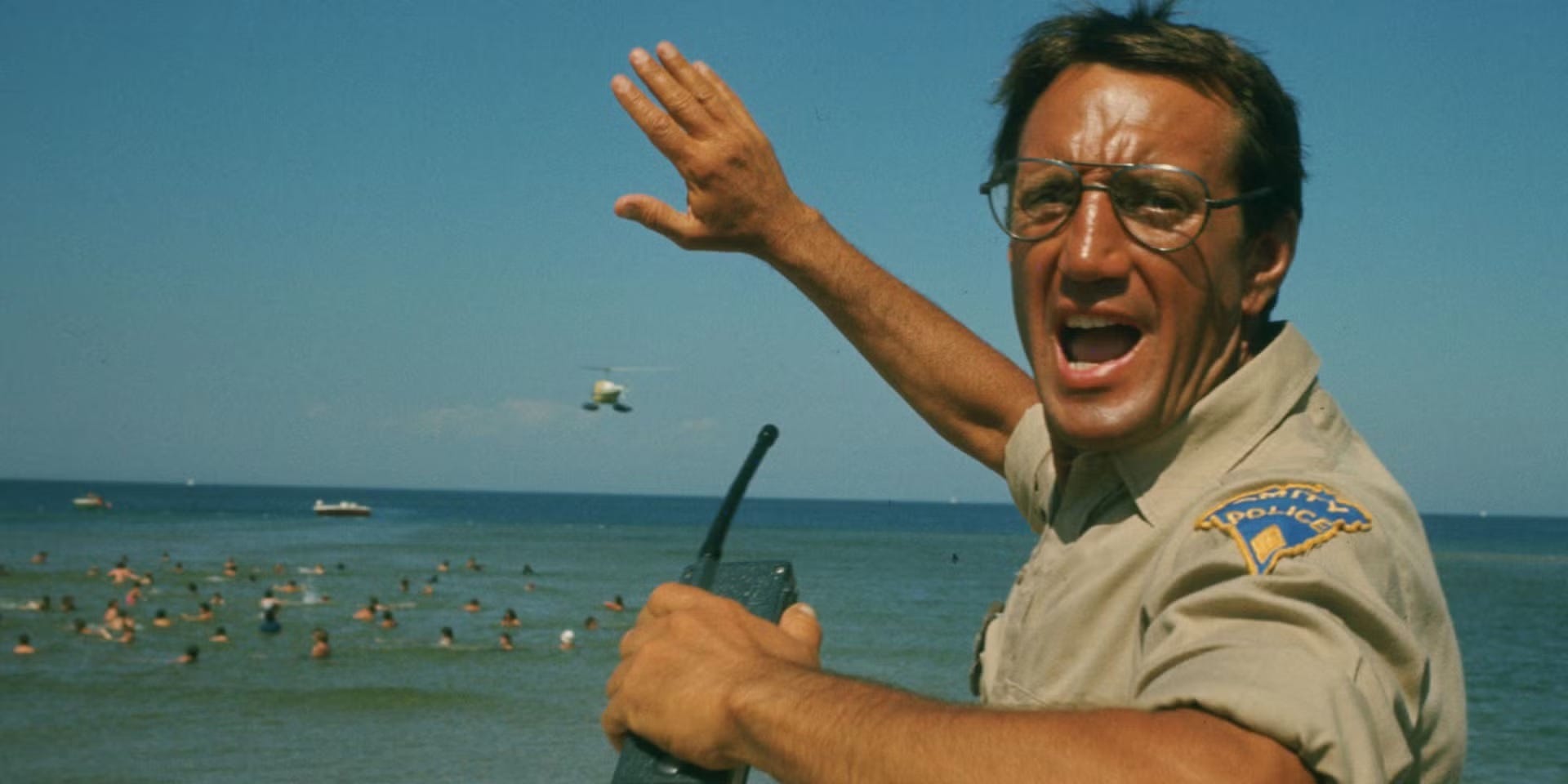
For the past several weeks, I’ve been trying to determine whether or not Steven Spielberg’s Jaws was the very first film I ever saw in a movie theater. As a guy who’s wasted so much of his life in sticky-floored auditoriums seeing countless weekend matinees as a kid, working at a movie theater in high school, going to film school for college (unwise), writing screenplays, embarking on this movie newsletter (possibly unwise, though remains to be seen), you’d think I’d know with certainty which film was the first to plant its flag on the moon of my lifelong cinematic obsessions. You’d be wrong. And so would I apparently, because for a long while, I was dead certain that film was Jaws. And now I’m pretty sure it was another Spielberg blockbuster entirely.
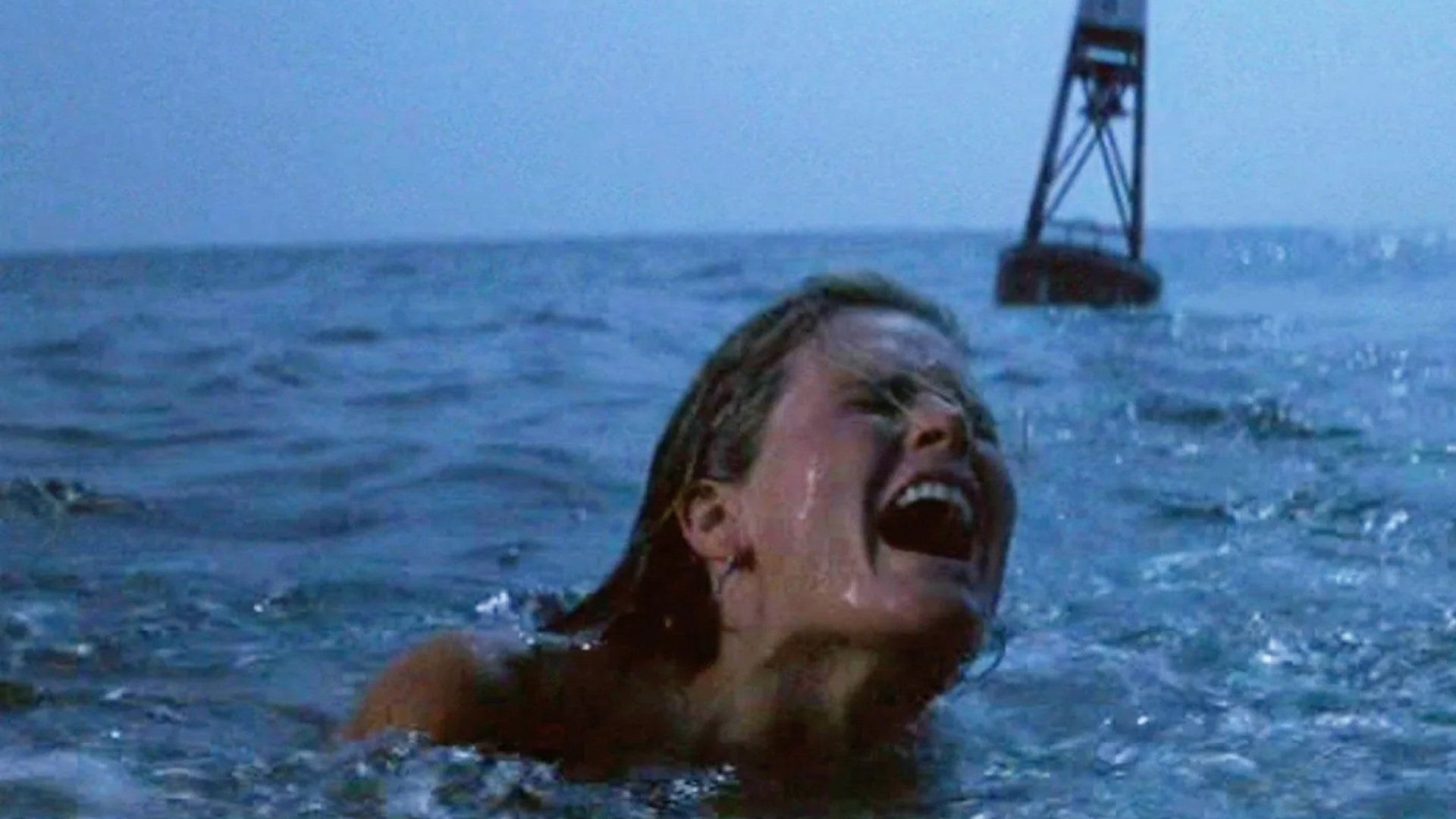
Yet, I have nagging sensorial recollections of seeing that opening scene on the beach in Jaws as a child sitting in a crowded movie theater in Virginia (and in a fourplex called “The Virginians” no less). Not only that, but sitting on my mother’s lap because the show was sold out, and I was too young and pint-sized to warrant taking up a whole paying person’s seat. The signature duh-duh, duh-duh, duh-duh John Williams score and the skinny-dipping lady swimmer getting sucked under the water and dragged around until she bled out—it scarred me, burrowing its way into my movie subconscious just like it did millions of others. But WHEN did it scar me exactly?
Obviously, it couldn’t have been the initial theatrical release (June 20, 1975) because I was still in diapers then. But it very easily could’ve been the 1979 re-release. I was in kindergarten by that point, regularly going to movies with parental accompaniment, and may have still been enduring enforced theatrical lap-sitting during sold-out shows. Though my initial Spielberg shark-spotting sensations are strong, the timeline is extremely hazy, so I asked both of my folks recently if they remembered seeing it (or re-seeing it) in the Summer of ’79.
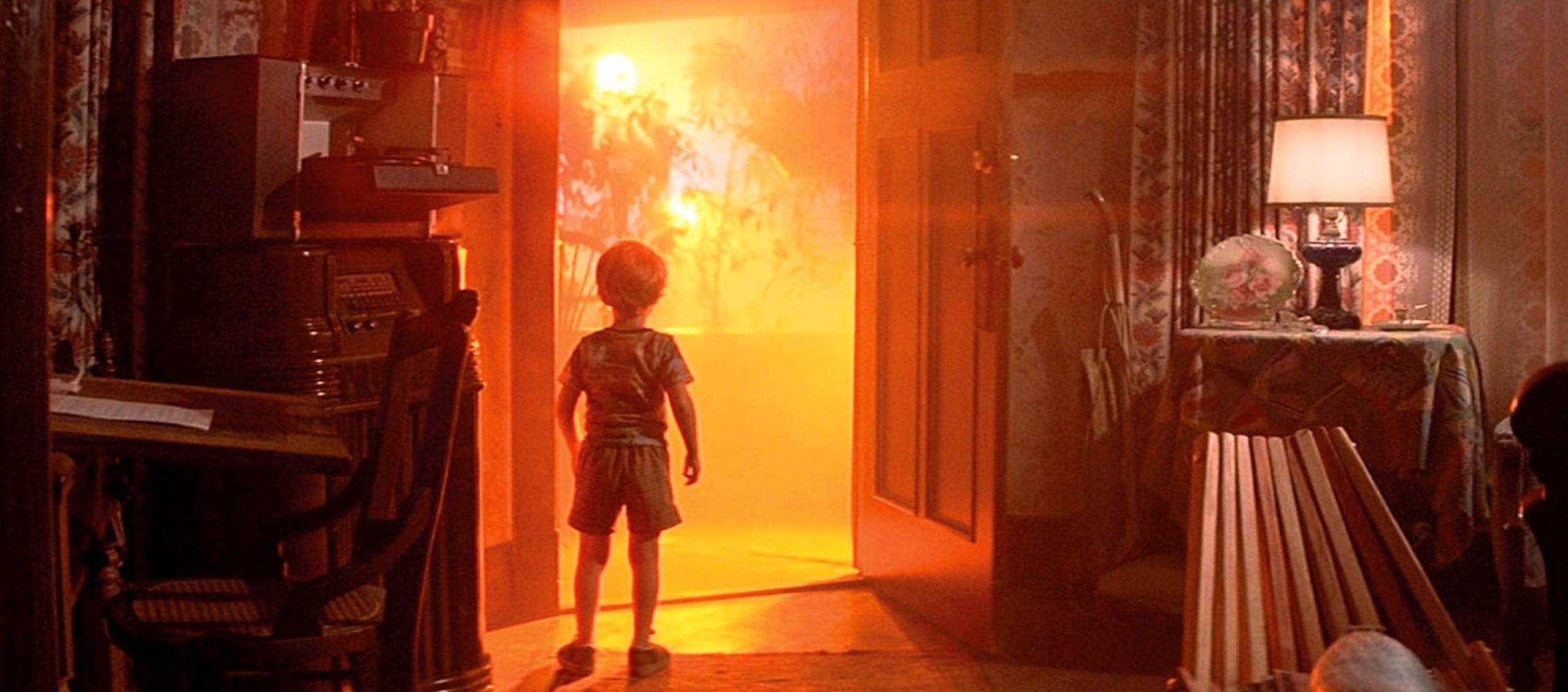
My mom didn’t remember the when’s and where’s of seeing Jaws at all…just that it had been seen. My dad’s recall was slightly more specific. He knew that he saw it with my mother when it first came out and at an appropriate surfside venue—Buckroe Beach in Hampton, VA. He added that the movie scared the bejesus out of him, and the fact that he saw it near Atlantic waters not far removed from fictional Amity Island only increased his real-life fright. It basically ruined his beach vacation, as it did to so many others in the Summer of 1975. Neither remembered having a lap-sitting toddler in tow though, which leads me to the conclusion that I’ve been misremembering things all these years, suffering from some sort of personal first-movie Mandela Effect. I don’t think I’m far off the directorial mark though. As mentioned, I’ve narrowed it down to a second strong possibility. UFOs. Summer of ‘77. I’m pretty sure now that the Virginians lap-sitting happened at Close Encounters of the Third Kind.
So my very first movie probably wasn’t the one that put Spielberg on the map and made him a household name. And I can’t say with 100% certainty that I ever watched it in an actual movie theater as a kid. But Jaws still loomed large over my ‘70s/‘80s childhood, specifically when it came to summer vacations. I can’t recall a single Virginia Beach or Myrtle Beach trip in which Spielberg’s toothy underwater leviathan didn’t come up in conversation in some form or another, either as off-color jokes or serious hesitation about going too far out past the breakers on your new gift-shop boogie board. Dorsal-finned man-eaters were circling out there in droves after all, just waiting to chomp down on your dangling legs or paddling arms. 1980s Movie God Steven S. had told us so, and who was I to doubt the dude that showed us the almighty face-melting power of an angered deity at the climax of Raiders of the Lost Ark?
As a result, I stayed pretty close to the shore at all times during beach visits. Honestly, I had enough trouble as it was in the first few feet of water. I can’t tell you how often I was stung by nasty jellyfish at Nags Head or knocked off my feet by the undertow at Sunset Beach, then banged around on the ocean floor like a waterlogged rag doll. It’s why, to this day, I usually opt out of going to the beach when invited. Too many traumatic memories! For me, beach = pain. Also, more potential skin cancer (I had a run-in with some pesky basal cell on my cheek a few years back). I am a white guy, after all. I’ve got enough problems slathering insanely high SPF levels all over my body to worry about shark repellent too (Great White, blue, tiger-striped or otherwise). The sting of those Nags Head jellies still haunt me more than the threat of “Bruce” from Martha’s Vineyard, if truth be told.
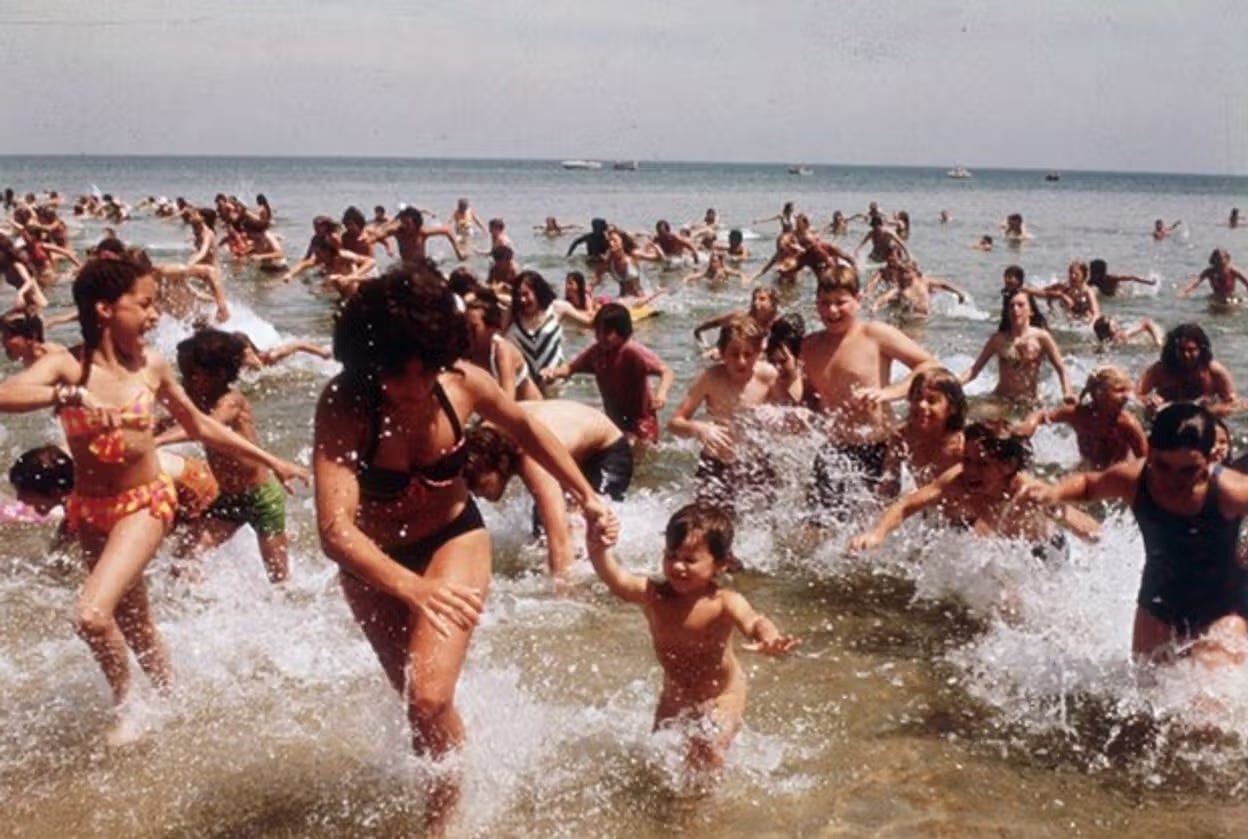
So how was I to properly celebrate the 50th Anniversary of Jaws if I refused to go to the beach, or even attend one of those yearly “Jaws On the Water” floating-in-an-innertube lake screenings that the Alamo Drafthouse routinely holds? Well, I didn’t get any sand between my toes, but I did do some light “beach reading” in preparation. In other words, I cracked the pages of Peter Benchley’s pre-Spielberg best-seller Jaws for the first time, before revisiting the 1975 movie on Peacock. Surprise! Like most nationwide best-sellers that precede (and then are quickly overshadowed by) a mammoth, record-setting blockbuster, it is not great literature! Not that I was expecting Moby Dick, but a little more shark hunting and a little less dime-store paperback adultery intrigue would’ve been just peachy.
In the book, Martin Brody’s wife Ellen carries on a torrid affair with the handsome young oceanographer, Matt Hooper, who is new to Amity. Besides the moral dilemma of whether or not to close the beaches after the first shark attack, thereby killing off Amity’s tourist economy but potentially saving beachgoer lives, it’s all that part-time cop and full-time jealous husband Brody thinks about. A big chunk of the book’s middle section is devoted to Ellen’s affair, Brody’s discovering it, and then him obsessing over her infidelity and what to do about it. The whole thing feels like an interrogation of the mid-‘70s marital institution, a referendum on the after effects of the Free Love ‘60s. It’s a total post-Summer of Love bummer that screams “as penned by a straight married guy with a grudge” (possibly because he was cheated on too). Hell, Quint doesn’t even really show up in Benchley’s book until the final third. By then, I was so bogged down in Chief Brody’s failing love life and emasculation malaise that I had forgotten I was reading a book about a big murderous fish.
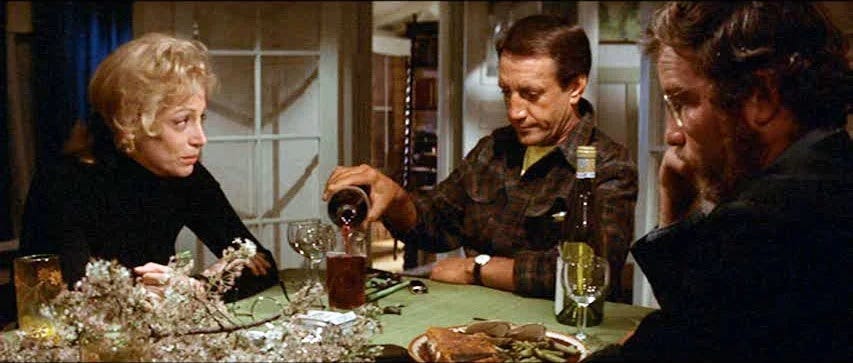
If you’ve seen the movie, or watched any of the numerous “Making of Jaws” documentaries, you already know that Benchley and screenwriter Carl Gottlieb wisely excised the Ellen-Matt affair completely from the final script. Then Spielberg took it one step further by casting actors in those roles that would make such an affair, as written in the book, not only unsettling onscreen but potentially implausible too. I mean, who wants to see a version of Confessions of a Young American Housewife starring stately Lorraine Gary and squirrely Richard Dreyfuss? How would that even work? I’m guessing the pairing would be even more prone to failure than the infamous jerry-rigged animatronic shark. This is young ‘70s Spielberg we’re talking about, not some softcore Joe Sarno. This is not the same Spielberg who thoughtfully reflected on his own troubled mother’s marital infidelities almost fifty years later in The Fabelmans.
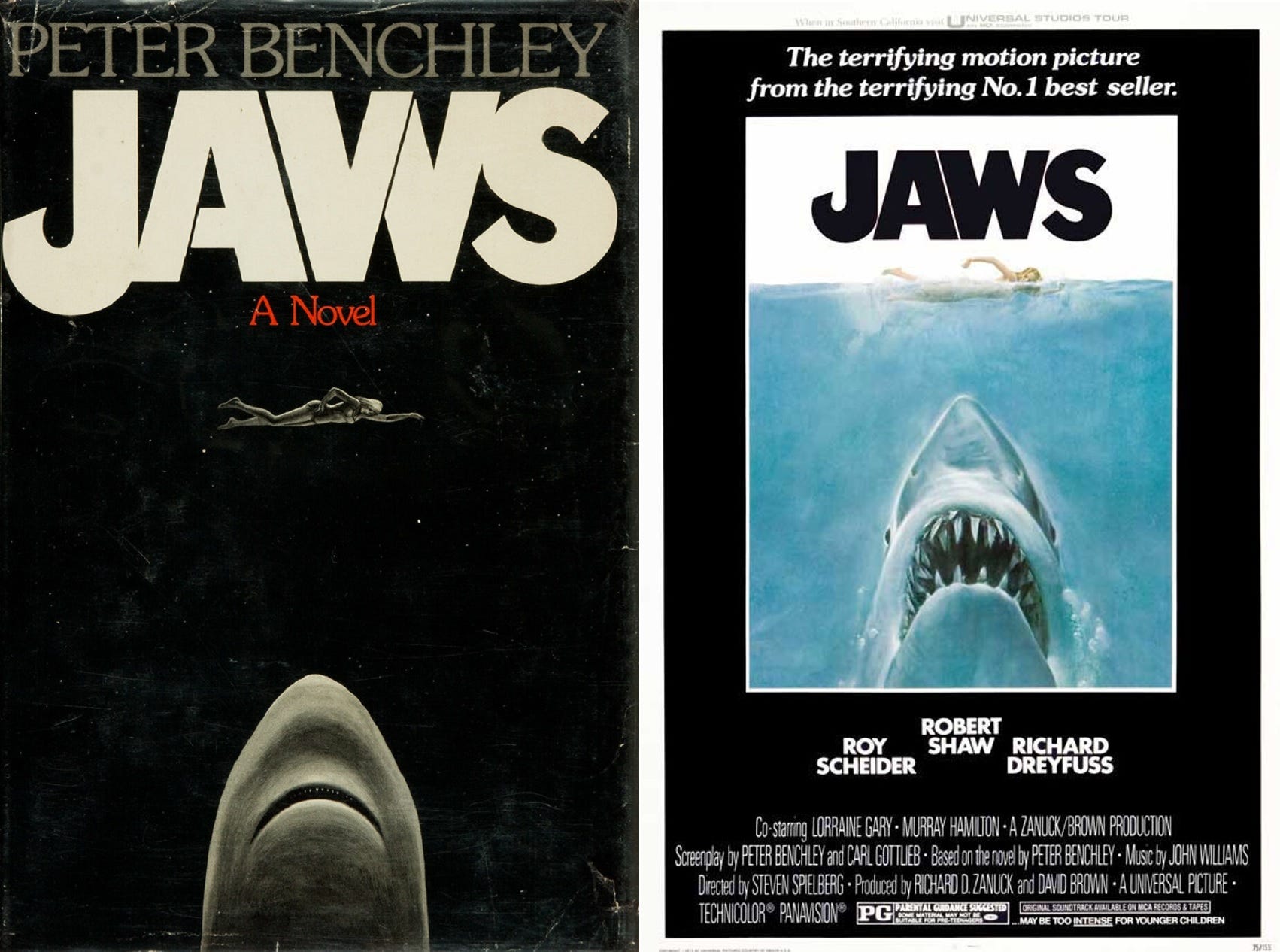
Though the adultery aspect in Benchley’s book might’ve initially attracted child of divorce Spielberg to the story, his more primal boyhood interests obviously won out in the end. He wanted to make a suspenseful 1950s-style monster movie; not a movie that ruminates on marriage post-Woodstock. Nowhere does he make this clearer than in that first scene, and in laughably blunt fashion. A young hippie-ish couple meets briefly during a beachside cookout. Within seconds, she’s flinging off her shirt, running for the waves, teasing the guy into joining her for a nighttime skinny dip session. Before the poor guy can even untie his shoes, his potential mate is out deep in the ocean, getting pulled under and gobbled up by a creature which, on both the world-famous movie poster and book cover, kind of looks like the head of giant penis coming to get her (sorry, but you know it’s true). I’ve heard of coitus interruptus, but chondrichthyes interruptus? Sheesh!
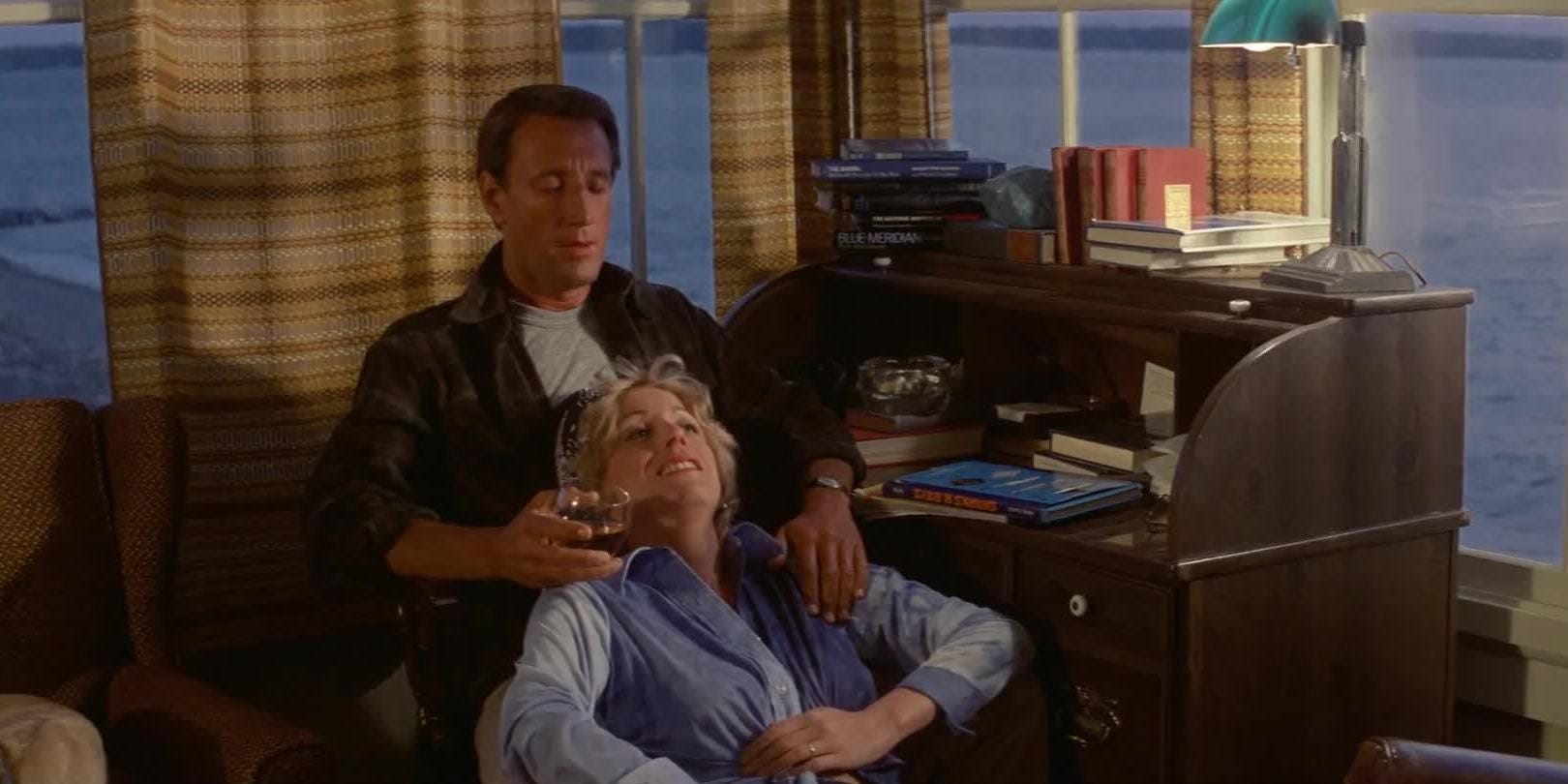
It’s as if Spielberg is saying from the get-go: “Yeah, sorry lady, but the ‘60s Sexual Revolution is over. You’re on my mid-‘70s horror/suspense watch now, by which I mean a replay of the sexually repressed ‘50s with much more blood and only occasional references to nookie.” Consider that famous line Ellen Brody casually drops to husband Martin (Roy Scheider) minutes later, “Wanna get drunk and fool around?” Needless to say, we don’t see much follow-through on that invitation before the scene immediately switches focus to child-in-peril shark paranoia. That casual verbal come-on is about all that remains of Benchley’s original adultery subplot in the movie. Ellen Brody may still be a lusty housewife in Spielberg’s version, but she’s certainly not getting any satisfaction that we can see, either outside the marriage with Hooper or arguably inside the bounds of matrimony with her shark-distracted husband Martin.
Other than that great big adultery black hole, here are a few quick things I noticed or appreciated re-watching Jaws (and one or two documentaries on an old Blu-ray) after reading its original source material for the first time…
1) The Gore Quotient - For a PG-rated movie where we don’t really see the shark for the first three-quarters, it’s slightly gorier than I remembered in the slower parts leading up to the big “Bruce” attack on the Orca at the end. The first victim autopsy, cutting open the tiger shark’s innards to look for remains, Ben Gardener’s severed head missing an eye and floating around underwater, the Fourth of July boater’s bloody chomped-on leg sinking slowly to the ocean floor during the attack on Brody’s son Michael, etc. Or maybe these scenes just seemed gorier this time because I was projecting myself into the mind of a toddler and trying to remember if it was the first movie I ever saw on the big screen. Would responsible parents really take a child younger than five years old to see this movie? Maybe. It WAS the 1970s.
2) The U.S.S. Indianapolis Speech – I’d forgotten just how long Quint (Robert Shaw) drones on in his signature Irish/Cornish pirate brogue about his platoon’s World War II run-in with a school of man-eaters. Don’t get me wrong, it’s great, and probably the highlight for any aspiring screenwriter or young actor re-watching the Spielberg classic. In one four-to-five-minute span, it tells you everything you need to know about the character, his Captain Ahab-esque obsessions, and why he now refuses to wear a life jacket. But would any modern-day blockbuster let an actor or director get away with telling a story in such slurred, inebriated fashion for this much screen time? Probably not, and that’s what makes it so special. That, and the fact that the dialogue screams “John Milius assisted” to me now more than ever before. Credit where credit is due, the guy could spin a grand old war story, but it’s fortunate that Shaw was on hand to pare it down from nine pages of uncut military machismo to half that length in brilliantly mumbled Quint monologue.
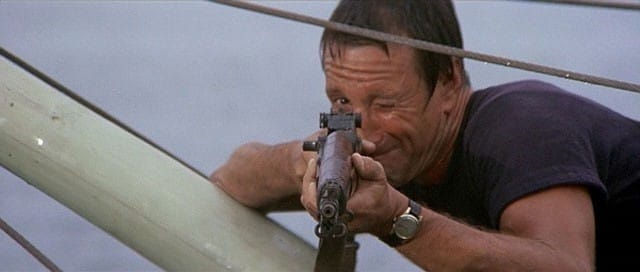
3) That Explosive! Shark Tank Ending – Ah, to return to the days when Spielberg still knew how to properly close out a picture with a bang, before he started whiffing all his denouements and undercutting his own directorial efforts with self-important explanatory bookends (see the otherwise fantastic Saving Private Ryan, Munich, and Minority Report for examples). Preposterous though it may be, you just can’t beat Roy Scheider taking pot shots with a rifle at an oxygen tank improbably lodged in a Great White’s maw, until it detonates the monster in a glorious spray of blood and gore raining down on the ocean as Brody cackles with triumphant glee. It had me cackling as well this time, even after Dreyfuss’s Hooper reemerges from presumed underwater death, and the two paddle away together on the wreckage exchanging throwaway banter as credits roll.
That’s just a few Jaws ’75 observations from the vantage of 2025. But wouldn’t you know it, my anniversary re-watch fun did not end there. Since all three sequels were just sitting there for free (well, $2.99/month) on Peacock, I gave them another gander too, knowing from memory (spotty though it may be) that I was in store for some seriously diminishing returns. In brief…
Jaws 2 (1978) – Not as bad as I remembered, though it largely replays the hits, and director Jeannot Szwarc doesn’t have that same Spielberg finesse for milking suspense. I know the climactic shark death by electrocution (a dislodged undersea cable) rubs some thinking people the wrong way, but any time you put electricity near open water in a horror movie, it generally works for me, even if the exact science is iffy.
Jaws 3-D (1983) – I must admit I have a soft spot for this extremely dumb, extremely gimmicky Sea World-set sequel whose special effects now look absolutely abysmal without the blue/red cardboard and plastic glasses. It replayed on HBO all the time when I was a kid, and I’ve probably seen it more than any other shark movie, including the original Jaws. I mean, who can resist Louis Gossett, Jr. playing an amusement park heavy or a tag-team duo of dolphins saving the day at the end? Cindy and Sandy, you will forever be my twin cetacean guiding lights. Flipper can go fuck himself.
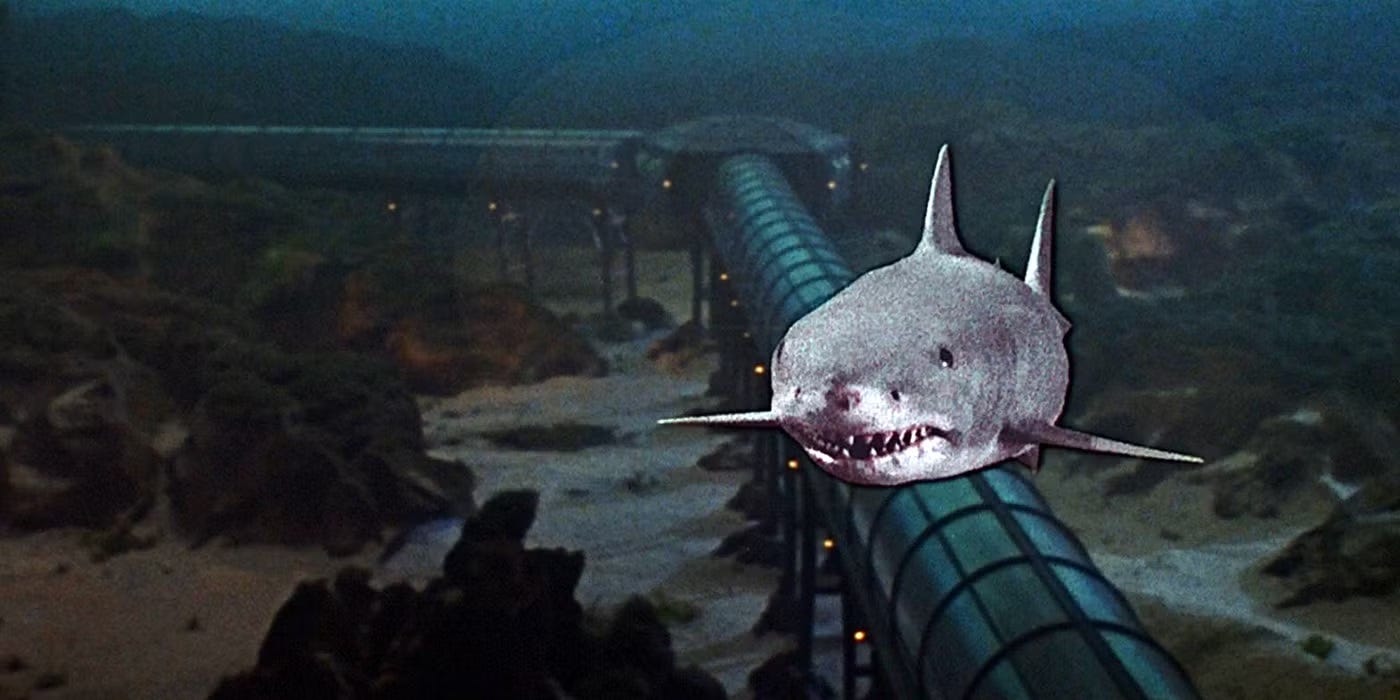
Jaws: The Revenge (1987) – Truly terrible, and I’m not just talking about Mario Van Peebles’ bad Jamaican accent or the fact that real-life sharks tend not to hold grudges or pursue elaborate personal vendettas that span multiple coastlines and continents. This movie’s biggest sin is just being plain old dull. How can a movie with “The Revenge” in its title and Michael Caine among its cast be so criminally boring?
Lastly, after sampling Peter Benchley in novel form for the first time, I knew I wasn’t interested enough to read any of his other books. But I was curious enough to watch two other post-Jaws adaptations of his work that I’d never gotten around to previously. Here’s a quick rundown…
The Deep (1977) – A fun Peter Yates adventure pic about deep-sea treasure hunting with great underwater cinematography, a gorgeous Jacqueline Bisset, a less gravelly than usual Nick Nolte, and a brilliantly barnacled Robert Shaw playing another crusty man of the sea. Like Jaws 3-D, this one features Louis Gossett breaking bad, but this time as a sleazy morphine/heroin kingpin. It also boasts a few baby sharks getting caught up in diving lines and one gnarly giant moray eel attack. Check it out if that sounds fun to you. Right now, it’s free on Tubi.
The Island (1980) – This obscure ‘80s Michael Caine thriller (directed by Fletch helmer Michael Ritchie no less!) turned out to be the goofy good time that Jaws: The Revenge failed to deliver. In a nutshell, it’s a modern-day pirate movie where Caine goes full Rambo with a machine gun by the end to save his brainwashed son from a Manson-like cult of island inbreds. There are zero sharks this time around, but there is a barracuda, one nasty-looking super-sized jellyfish (uh-oh, Nags Head flashbacks!), and tons of contraband cocaine. When one of the female cult members asks Caine what disease the white powder drug she’s never seen before cures, he answers with a shrug: “Insecurity.”
Well played, Sir Michael, and so true! Though it’s been a while, and my memory is probably hazy on that too. Perhaps I’ll have to jog it with a few more under-the-radar ‘70s and ‘80s sharksploitation selections in the coming weeks. Shark Week still falls sometime in July, right? If so, I better hurry up and get to chumming…